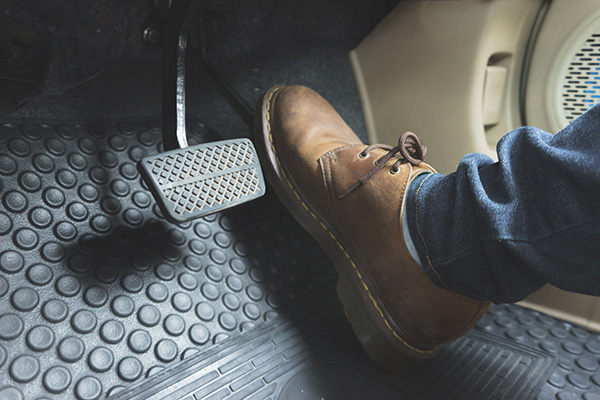
Transmission hesitation can feel subtle at first. You press the pedal to merge or pull out into traffic, and there is a short pause before the car actually picks up speed. Some drivers describe it as a delay, a sudden RPM spike, or a moment when the vehicle seems unsure which gear it wants.
That hesitation is your clue that something in the shifting process is not happening as cleanly as it should.
What Transmission Hesitation Feels Like On The Road
Not every hesitation feels the same, which is why it helps to notice the details. Sometimes the engine revs up, but the vehicle doesn't accelerate right away, then it catches. Other times the car lugs for a second, then downshifts late and feels jumpy.
You might notice it more when you accelerate from 20 to 40 mph, or when you roll into the throttle on a slight hill. It can also show up as a brief shudder right as the gear change happens.
If the symptom is repeatable in the same situations, that usually means it is not your imagination and it is worth checking sooner rather than later.
Common Causes Of Hesitation During Acceleration
Transmission hesitation is often caused by one of a few common issues. Low or degraded transmission fluid is high on the list because fluid quality affects hydraulic pressure and shift timing. If the fluid is old, overheated, or contaminated, shifts can get delayed or feel inconsistent.
Sensor and control issues can also play a role. Modern transmissions rely on input from speed sensors, throttle position data, and pressure-control systems to determine when and how to shift. When that information is off, the shift strategy can feel confused.
In some cases, the issue is mechanical wear inside the transmission. Clutch packs, valve bodies, and solenoids can wear over time, and the symptom may start as hesitation before it becomes harsher shifting.
How Your Driving Can Make It Worse
Driving conditions change how a transmission behaves. Heavy traffic creates heat, and heat thins fluid and stresses internal components. Hills and quick merges force downshifts under load, which is when weak pressure control or slipping clutches tend to show up.
You may notice more hesitation after a longer drive than at a cold start. That pattern can point to fluid problems or pressure changes that show up once everything is hot.
This is also why regular maintenance matters. Transmission fluid does not last forever, and heat is one of the biggest reasons performance changes over time.
What Happens If You Keep Driving With Shift Hesitation
A short hesitation can turn into bigger problems if it is ignored. When a transmission slips or delays, it creates extra heat and extra wear. That heat can accelerate fluid breakdown, worsening shifting.
If the engine RPM flares during a shift, it can be a sign that the transmission is not applying the clutch pack firmly. If it continues, the internal friction material can wear faster, and repairs become more involved.
It is not about panicking. It is about avoiding situations where a minor drivability issue becomes a reliability issue.
What To Pay Attention To Before You Bring It In
If you can share clear symptoms, it helps narrow the cause faster. Try to notice when it happens and what the vehicle is doing right before the hesitation starts.
Helpful details include:
- Whether it happens only when the transmission is hot or also when cold
- If the RPM rises without matching acceleration
- Whether it feels like a delayed downshift, a delayed upshift, or both
- If it is worse on hills, during passing, or during stop-and-go traffic
- Any warning lights or dashboard messages that appeared recently
If you check your transmission fluid and notice a burnt smell or very dark fluid, mention that too. If your vehicle does not have a dipstick, do not worry, that is common on many newer models.
How A Shop Confirms The Real Cause
A proper inspection starts with verifying the symptom and checking the basics first, including fluid condition and any stored fault information that might explain the behavior. From there, the next step is looking at shift timing, pressure control behavior, and any signs that a solenoid, sensor, or valve body issue is affecting how the transmission applies and releases gears.
If the hesitation is tied to a specific gear change, that narrows the search quickly. If it shows up in several situations, it may point more toward a fluid condition, heat-related issues, or broader pressure-control problems.
We also consider other systems that can mimic transmission hesitation, such as engine misfires under load or throttle control issues. The goal is to confirm what is actually causing the delay before repairs are recommended.
Get Transmission Service In Marysville, WA With Bud's Auto Repair & Transmission
We can inspect the shifting issue, confirm the cause of the hesitation, and explain the most practical repair path based on our findings.
Set up a time with Bud's Auto Repair & Transmission in Marysville, WA, and we will help you get confident acceleration back without the lag and second-guessing.