When a car suddenly feels weak, like it lost half its power, it’s easy to think something major just broke. Sometimes it did, but a lot of the time, the vehicle is doing it on purpose. Limp mode is basically your car’s way of saying it detected a condition it doesn’t trust, so it’s limiting power to protect the engine, transmission, or emissions system. It can feel dramatic from the driver’s seat, even when the original trigger is something fairly fixable.
What Limp Mode Is Trying To Prevent
Limp mode is a protection strategy. The computer sees data that suggests the engine or transmission could be damaged if you keep driving normally, so it reduces power, limits RPM, changes shift behavior, or disables certain functions. It’s not annoying just for fun. It’s trying to keep a small fault from turning into an expensive failure.
One reason this surprises people is that the car can still run smoothly while making less power. You might not hear any unusual noise, but acceleration feels lazy, and the vehicle may not want to shift the way it usually does. That mismatch is a classic limp mode clue.
Early Signs Before Power Drops
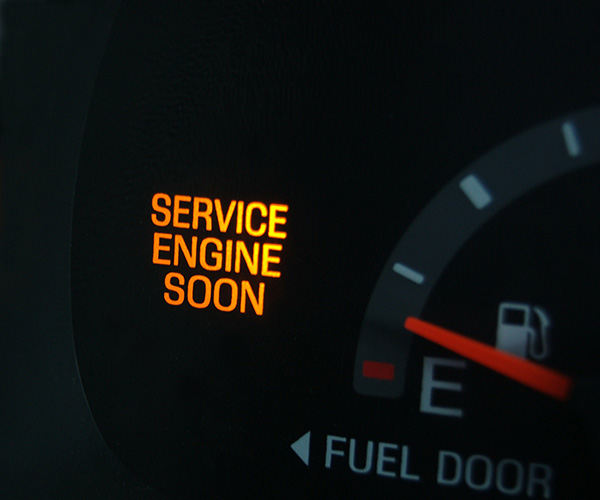
Sometimes the power loss feels like it came out of nowhere, but there are often small hints leading up to it. You might notice the transmission hesitating, a brief stumble when accelerating, or the engine taking longer to respond to the pedal. Some drivers notice a warning light that came on earlier and was easy to ignore because the car still drove fine.
Pay attention to patterns. Does it happen on the highway after a longer drive, during hot weather, when climbing a grade, or right after you start the car. Those details help narrow the trigger because many limp mode events are condition-based, not constant.
Common Triggers That Put A Car Into Limp Mode
There isn’t a single universal cause, but we see repeat offenders across many makes and models. On turbocharged vehicles, boost control problems are high on the list. A boost leak, wastegate issue, or sensor reading that doesn’t match expectations can cause the computer to pull power fast to prevent overboost or underboost damage.
On naturally aspirated engines, limp mode can be triggered by throttle control faults, airflow sensor issues, misfire activity, overheating risk, or fuel delivery problems. On many vehicles, transmission-related faults can also occur, especially if the computer sees excessive slip, abnormal pressure control behavior, or fluid temperature that’s climbing too high. Even something as simple as a low battery voltage event can cause modules to act up and set the stage for reduced power.
What To Do When Power Drops Mid Drive
First, don’t panic and don’t try to “power through” it. Ease off the throttle and get yourself into a safer lane or exit when you can. If you see the temperature gauge rising, an oil pressure warning, or the engine is shaking badly, that’s the moment to stop driving and shut it down as soon as it’s safe.
If it’s only reduced power and the car is otherwise running smoothly, you can usually drive gently to a safe place nearby. Keep RPM modest, avoid hard acceleration, and don’t tow or load the vehicle. Sometimes cycling the key will temporarily restore power, but treat that as a clue, not a fix. If it happened once, it can happen again, and it usually picks a worse time the second round.
Owner Habits That Make It Worse
The biggest mistake is continuing to drive it hard because you’re late. Limp mode often shows up when something is already on the edge, and heat plus load is what pushes it over. Another common mistake is clearing codes immediately. That can wipe helpful stored information that shows what was happening when the fault occurred.
We also see people replace the part that sounds most guilty based on a generic code description. That’s how you end up spending money and still having the same power loss next week. Limp mode triggers can be a chain, where one issue causes a second system to react, so a quick guess can miss the real cause.
How The Cause Gets Confirmed
The best approach is to look at the conditions that set the event and then verify the likely systems. Stored fault data can show whether the computer was unhappy with boost pressure, throttle control, fuel mixture correction, temperature, or transmission behavior. Then it’s about checking the basics that can create those readings, like intake leaks, sensor signals, wiring integrity, fluid level and condition, and whether the engine is misfiring under load.
We see a lot of cases where the car feels fine in the parking lot but acts up on the road, so it’s important to match testing to the conditions that trigger the problem. Once the real cause is confirmed, the repair plan is usually much more straightforward, and you’re not paying for a pile of parts you didn’t need.
Get Your Service in Marysville, WA with Bud's Auto Repair & Transmission
If your car has gone into limp mode or suddenly feels down on power, it’s worth having it checked before it leaves you stuck in reduced power again. We’ll pinpoint what triggered the power limit and walk you through the next steps in plain language.
Get transmission service in Marysville, WA with Bud's Auto Repair & Transmission, and we’ll help you get your power and confidence back.